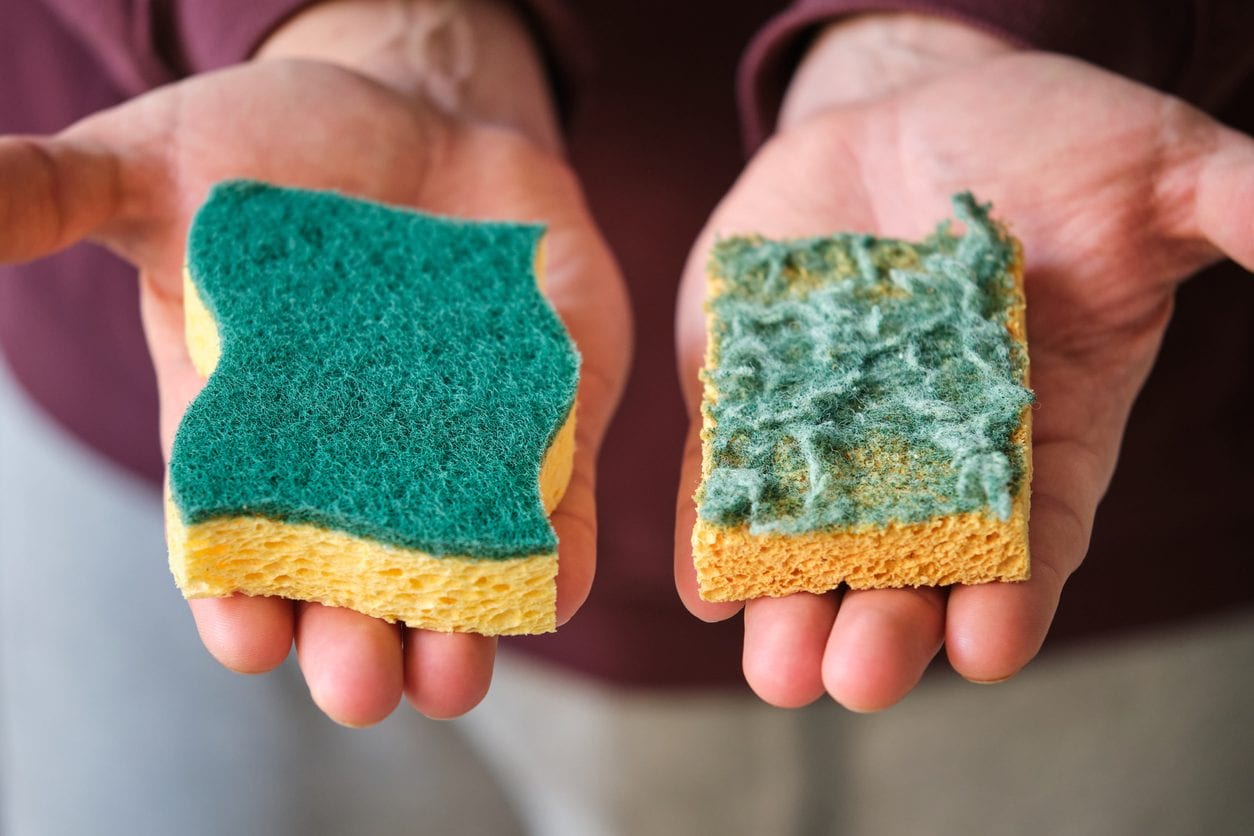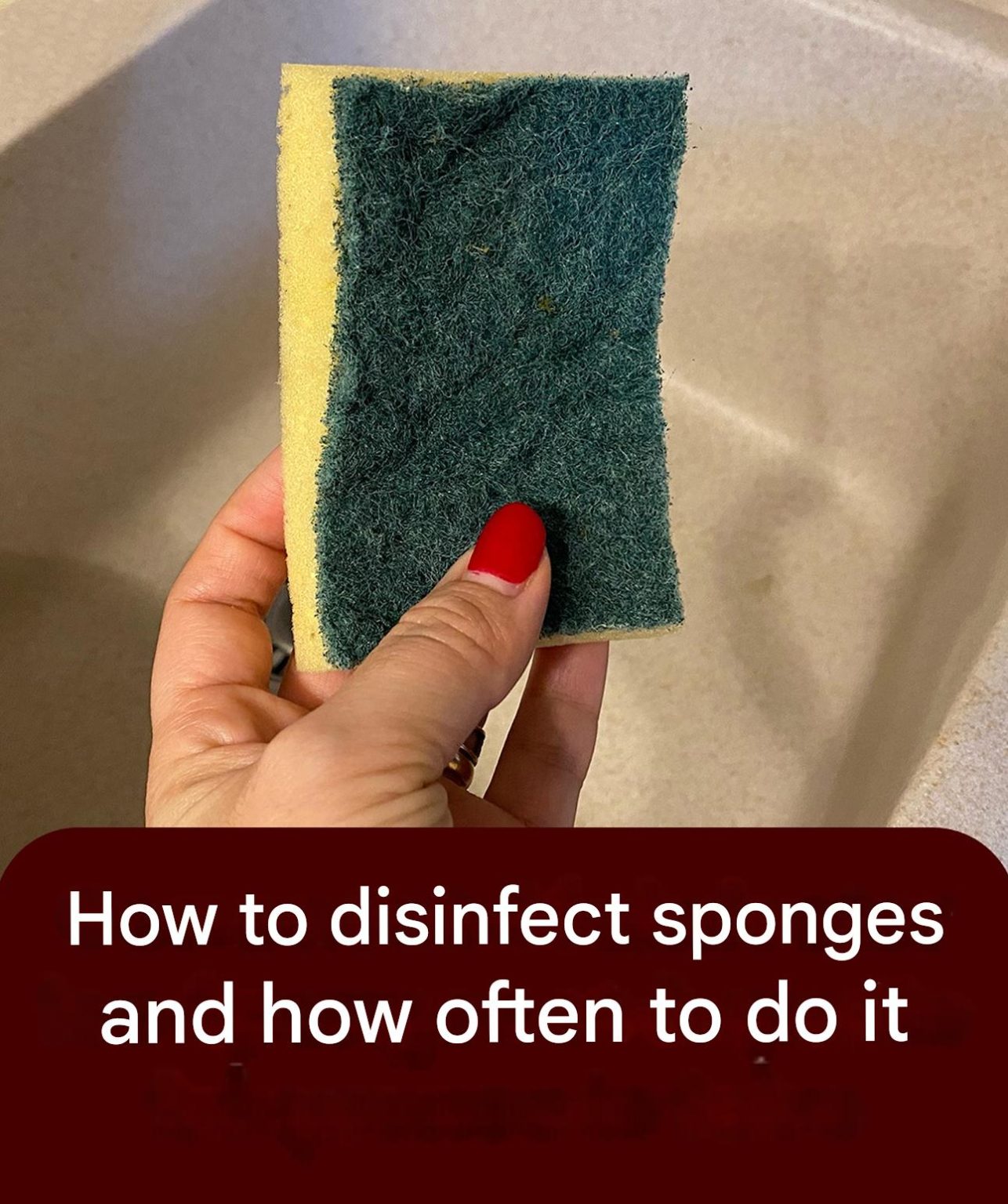
In the kitchen, there are little gestures we repeat automatically… and which sometimes conceal bigger questions. The sponge, for example: we rinse it, wring it out, and put it back on the edge of the sink, thinking we’re doing the right thing. Yet, behind its harmless appearance, it can become a veritable invisible breeding ground. Should we microwave it? Boil it? Or replace it more often than we think? Before changing your habits, there are a few truths worth knowing.
Why does the sponge so quickly become a breeding ground for microbes?

The most effective methods for disinfecting a sponge
When it comes to sanitizing a sponge, heat is your best friend. And the good news is: you already have everything you need at home.
The microwave is one of the most effective cleaning solutions. For best results, the sponge must be completely soaked in water. Then, place it in the microwave at full power for one minute. The steam generated will do the deep cleaning. Just be careful never to use a dry sponge or one containing metal parts.
The dishwasher is an excellent alternative. A complete cycle at high temperature, with drying, achieves a very similar result. Simply place the sponge in the top rack and start the program.
Finally, boiling water remains a reliable option. Soak the sponge in a pan of simmering water for about five minutes. It’s simple, economical, and remarkably effective for regular cleaning.
How often does it really need to be addressed?