1.4 Marbling
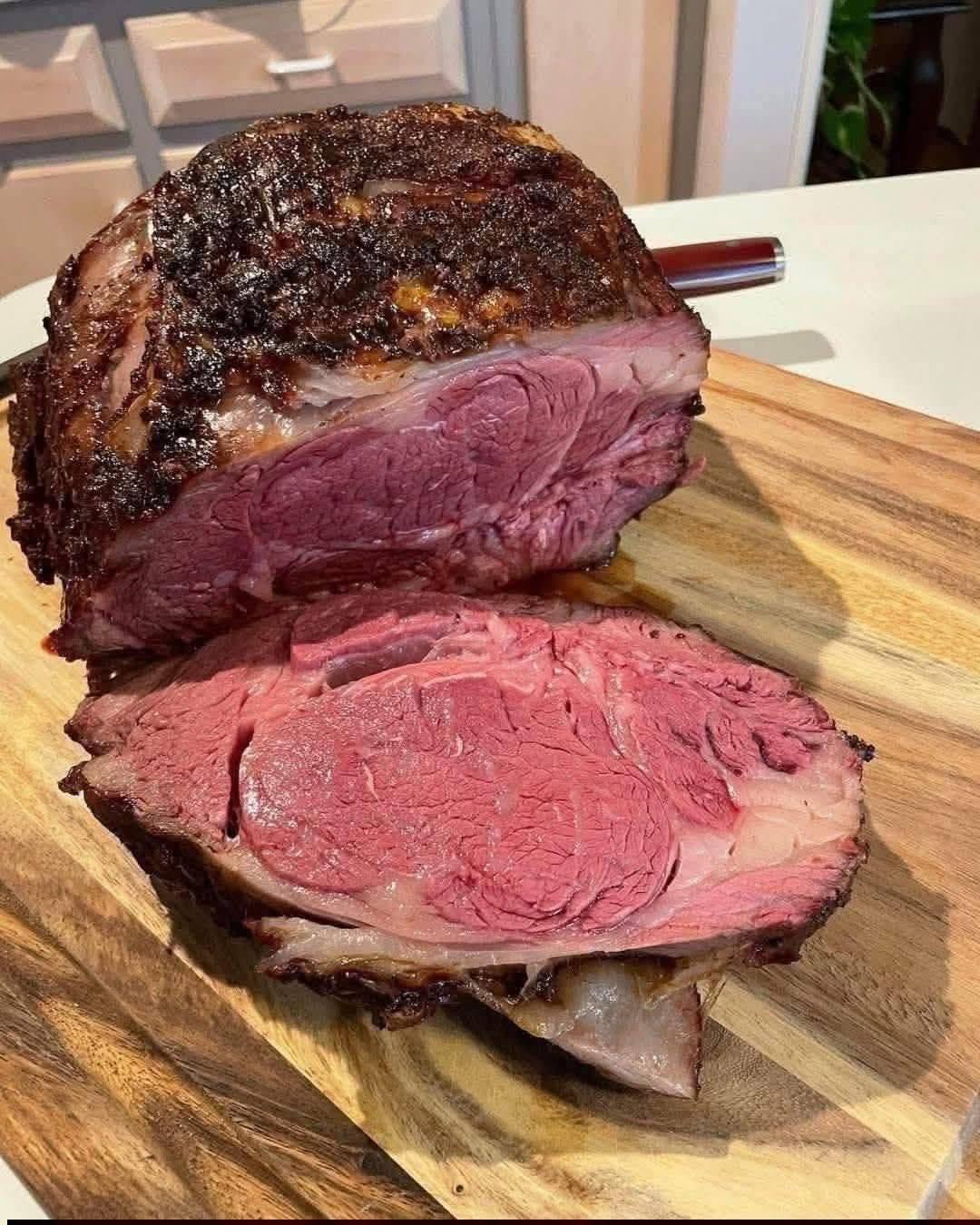
Look for visible streaks of white fat throughout the meat. Marbling is essential for flavor, juiciness, and tenderness.
2. Preparing the Prime Rib
2.1 Thawing
If frozen, thaw the roast completely in the refrigerator. Depending on size, this may take 24–48 hours.
Avoid thawing at room temperature, as this can lead to uneven cooking and potential bacterial growth.
2.2 Bringing to Room Temperature
Remove the roast from the refrigerator about 2 hours before cooking. This promotes even cooking from edge to center.
2.3 Trimming
Trim excess fat to about ¼ inch thick. Leave a thin fat cap to enhance flavor and create a golden crust.
3. Seasoning the Roast
Seasoning is crucial. A simple, classic rub allows the beef’s natural flavor to shine.
3.1 Classic Seasoning Rub
-
2–3 tablespoons kosher salt
-
1–2 tablespoons freshly ground black pepper
-
1–2 teaspoons garlic powder
Steps:
-
Pat the roast dry with paper towels.
-
Rub seasoning evenly over all surfaces (including under the fat cap if desired).
-
Let sit for at least 1 hour at room temperature, or refrigerate overnight for deeper flavor.
4. Cooking Techniques
Precision is key to achieving a crisp exterior and a tender, juicy interior.
4.1 Traditional Oven Roasting
-
Preheat: 450°F (230°C)
-
Initial sear: Roast 20–30 minutes to develop a crust.
-
Reduce heat: Lower to 325°F (160°C) and cook to desired internal temperature:
-
Rare: 120–125°F (49–52°C)
-
Medium-rare: 130–135°F (54–57°C)
-
Medium: 140–145°F (60–63°C)
-
-
Rest: Tent loosely with foil and rest 20–30 minutes.
4.2 Reverse Sear (Optional)
-
Slow-cook at 225–250°F (107–121°C) until 10–15°F below target temperature.
-
Finish with a high-heat sear for 10–15 minutes.
Benefits: More even doneness and superior crust development.
4.3 Use a Meat Thermometer
Insert the probe into the thickest part, avoiding bone.
Remember: The internal temperature will rise 5–10°F while resting, so remove the roast slightly early.